

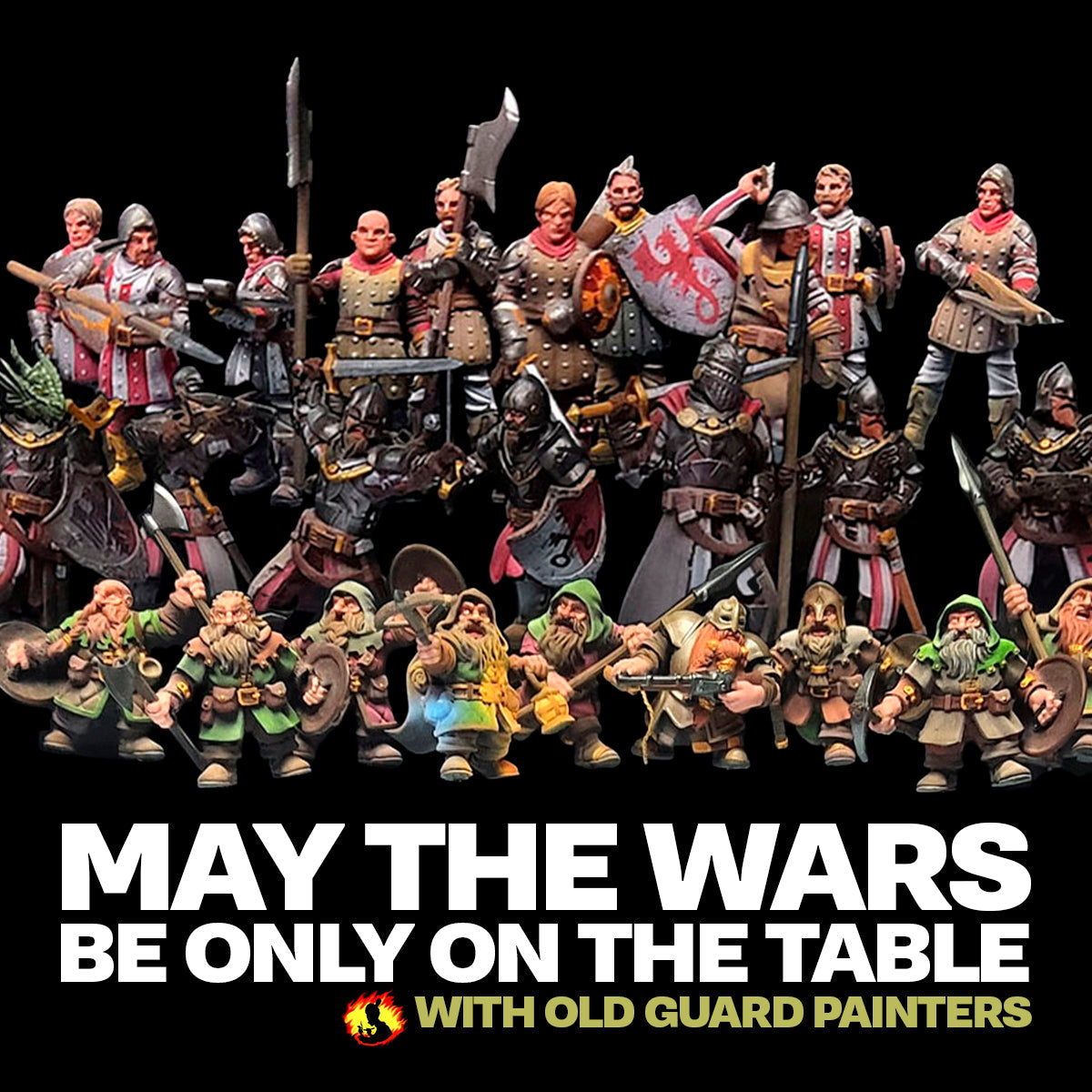
The action of miniature painting is often quiet—time slowing down while you hold a figure under a desk lamp and add colour. For many hobbyists, it’s a way to unwind, to learn history or fantasy worlds, and to connect with others around a shared table. For Vladimir Zhilko, it became something larger: a lifelong passion, a global business, and a point of stability in a world that has often been anything but stable.

Vladimir’s journey into the hobby began early. After moving from the Soviet Union to Denmark in 1991, he discovered miniature painting at the age of 15 through a local wargaming club. His first figures were 15mm Revell plastics—British and French troops—painted not in isolation, but alongside others. That setting mattered. The club wasn’t just about games; it was about people. Members roleplayed, shared knowledge, and treated one another with respect. Older hobbyists became role models. Younger players were welcomed. Everyone learned.
That sense of community is something many hobbyists recognise. Miniature gaming has always had a special ability to bring together people of different ages, professions, and backgrounds. In Vladimir’s club, students sat beside soldiers, teenagers beside retirees. History, rules, and painted armies created a common language. Through historical wargaming, Vladimir found an accessible way to understand the past—how wars shaped technology, culture, and society—without academic barriers. The figures on the table became a gateway to curiosity and learning.
In 2003, Vladimir moved to Ukraine, and, there, he founded Old Guard Painters, a wargame painting service, in Kyiv. What began as a passion project grew slowly, through persistence. The company endured multiple economic crises over the years. When commissions slowed, Vladimir and his team didn’t wait for conditions to improve—they painted stock armies and listed them for sale. Some figures waited years to find the right home. Others shipped quickly. What mattered was maintaining forward momentum.

Today, Old Guard Painters has painted over one million miniatures and grown into a team of 15 artists—its largest size yet. The studio paints roughly 5,000 figures a month and ships worldwide, from the US and UK to Australia and across Europe. Vladimir no longer paints himself; the demands of running the company leave little time. But he still plays and believes deeply in the hobby that made all of this possible.
Since 2014, Ukraine has lived with ongoing conflict, which escalated into full-scale war in 2022. Vladimir speaks calmly about being woken by drones early in the morning, about learning how to move quickly to bomb shelters, about adapting to a new normal. Orders have declined as the war has intensified. Emotional states fluctuate—confusion, clarity, survival—sometimes all in the same day. “You get used to it,” he says, not as acceptance, but as a reflection of the reality of the situation.

Leaving is possible. But Vladimir stays. He feels responsible for the artists he employs, for the studio they’ve built together, for what Old Guard Painters represents. In these circumstances, the miniature hobby takes on a different weight. It doesn’t replace reality, and Vladimir is clear-eyed about that. But it does offer moments of escape and connection. He runs Dungeons & Dragons sessions when he can—less frequently now, as the war continues—but with intention. Drawing inspiration from classic Dungeon magazines of the 1980s and ‘90s, he builds lived-in worlds and detailed terrain. For him, gaming is a way to reset, to imagine safety, to practice communication and resilience.
He describes it as “cheating the matrix”: stepping into another world, leveling up there, learning something, and bringing it back. He hopes, when circumstances allow, to launch a project using wargaming and roleplaying as an emotional safe haven for veterans—a space for rehabilitation and shared storytelling.

On the Old Guard Painters website, one line captures this philosophy perfectly: “May the wars be only on the table in miniature.”
It’s not a dismissal of hardship. It’s a reminder of why the hobby matters. Miniature painting doesn’t solve wars, heal trauma on its own, or replace real-world support. But it can offer focus in chaos. It can create community where isolation threatens. It can preserve creativity when everything else feels uncertain.
Across the world, hobbyists sit at their desks, painting armies and heroes, monsters and soldiers. Vladimir’s story reminds us that these small acts—one figure at a time—can carry meaning far beyond the table.
You can explore Vladimir’s work and the studio’s painted miniatures at Old Guard Painters.