

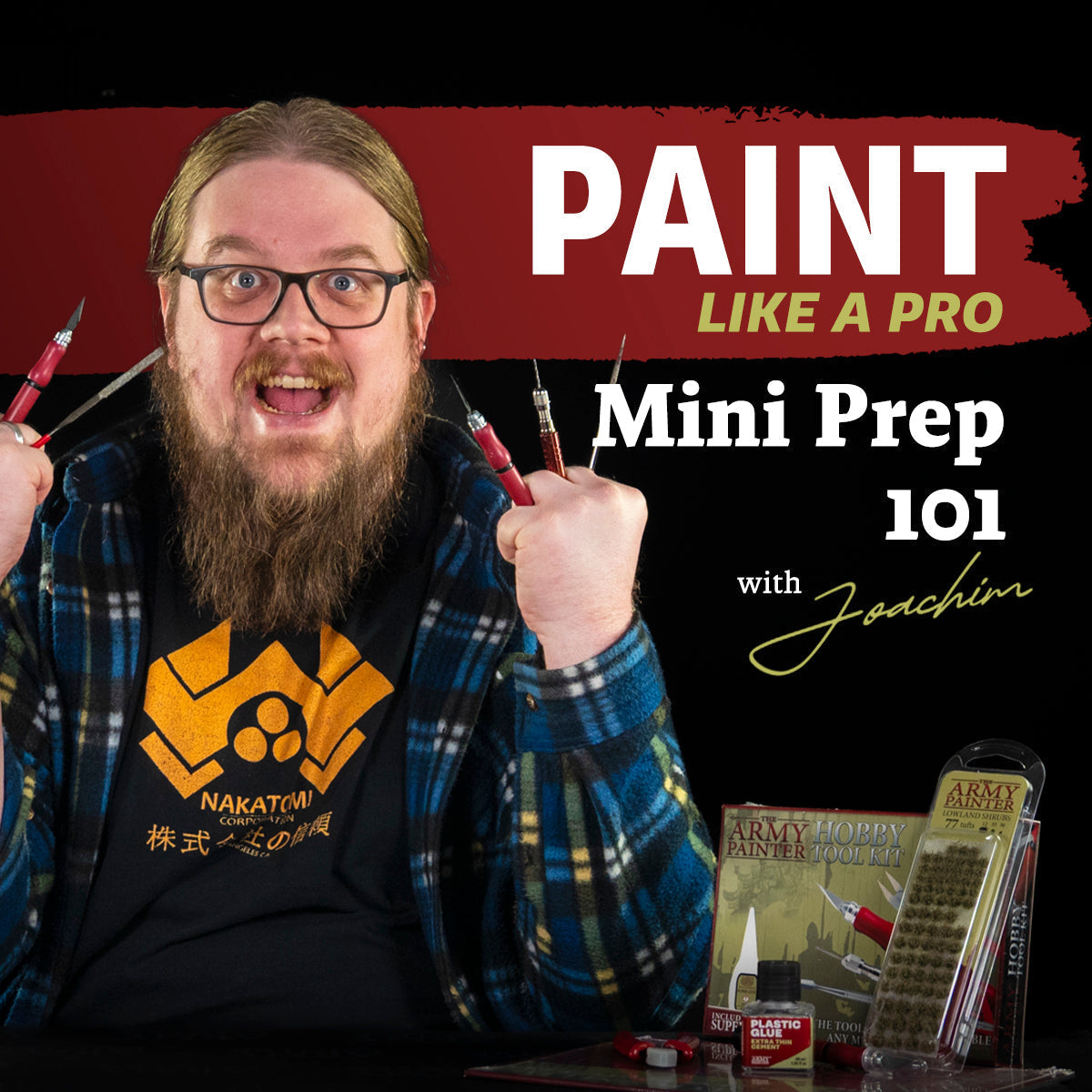
Welcome to the sixth entry of Paint Like a Pro, a series in which our talented painting team shares their top tips on various subjects related to miniature painting with you!
We’ve covered beginner must-haves, brushes, Speedpaint, airbrushing, and varnishes so far — but before any of that comes into play, there’s one step that can make or break your results: preparation.
This time, The Army Painter Studio Painter Joachim F. McLaughlin takes us through his process for preparing miniatures before painting, sharing five essential tips covering everything from cleaning and assembly to gap-filling and basing.
Get Your Mini Ready for Painting
Tip 1: Cut and Smooth

I always start a project with a well-organised, clutter-free hobby space, with all the relevant tools at hand. It might sound simple, but during assembly small parts can disappear quickly, and if you’re not careful, they’re gone. A tidy workspace won’t eliminate that risk entirely, but it definitely helps.
When working with plastic miniatures, most will come on a sprue with some form of assembly guide, usually in the box but sometimes online. Read it. Knowing the correct order to assemble parts will save you a lot of frustration later.
When cutting parts from the sprue, use a precise plastic frame cutter and pay attention to how you position it. The flat side of the cutter should face the miniature part. If not, you risk squishing or damaging the piece. If you’re unsure or working with something fragile, cut slightly away from the model and clean it up afterwards with a hobby knife. It gives you much better control.
Metal and resin miniatures don’t usually come on large sprues, but they can still have small supports or leftover material that needs removing. The same approach applies.
All miniatures will have some leftover material from production. Plastic, metal, and resin models have mould lines, and 3D-printed miniatures often have small marks where supports were attached. My preferred method is to scrape these away with the back of a hobby knife. It gives me control over how much material I remove and reduces the risk of cutting into the miniature.
If needed, I’ll follow up with files or sandpaper sticks to smooth the surface. For plastic miniatures, if a mould line is in a hard-to-reach place, I sometimes apply a bit of extra thin plastic glue to melt it away. This can also help smooth out minor scrapes, but you need to let it fully dry before handling the miniature again.
For metal miniatures, you can sometimes get unwanted texture on the surface. A light polish with fine steel wool can help but be careful not to remove details or polish too much, as that can make paint adhere less effectively.
If you’re working with resin, especially 3D-printed resin, be aware that dust can be harmful to inhale. Use appropriate protection when sanding or scraping.
Some resin and metal miniatures also need to be washed before assembly. This removes mould release agents that can prevent primer from sticking properly. I usually soak the parts in warm water with a bit of soap, gently scrub them with a toothbrush, rinse with cold water, and let them dry.
Before assembling, I always dry-fit the parts to see how everything fits together. A bit of sticky tack works well for this and makes it easy to adjust.
At this stage, I also consider whether I want to paint the miniature in sub-assemblies. This can make it easier to reach certain areas, like faces hidden behind armour or the inside of cloaks. However, it can also make it harder to keep the overall lighting and colours consistent, and there’s always a risk of damaging paintwork during final assembly. It depends on the project.
Tip 2: Glue It Together

The type of glue you use depends on the material.
For metal and resin miniatures, super glue is the standard. It bonds quickly, so you need to position the parts correctly straight away. Use as little as possible to avoid messy joins or loss of detail.
For plastic miniatures, plastic glue is usually the better option. It gives you a bit of time to adjust parts and works by melting them together, creating a strong bond. This also reduces the risk of parts breaking later.
You still need to be careful with how much you use. If glue spills onto areas it shouldn’t, don’t touch it until it has fully dried. The plastic will be soft, and you can easily damage the details or leave fingerprints.
There are different types of plastic glue available. I personally prefer extra thin cement, as it flows easily into seams and can also be used for more than just assembly.
Tip 3: Drill It and Pin It

A miniature drill isn’t essential, but it’s a very useful tool in several situations.
One use is for minor conversions. Drilling out gun barrels or adding battle damage to armour, buildings, or vehicles adds an extra level of realism.
Another is pinning. This is especially useful for heavier models or fragile connections. By drilling small holes into both connecting parts and inserting a metal rod, you create a much stronger joint. I’ve used this a lot on older metal models with large wings, where pinning ensures they don’t break off.
I also use pinning when attaching miniatures to bases or plinths. In some cases, I’ll use the pin itself to hold the miniature while painting, which can make handling easier.
Miniature drills are also useful for magnetising, though that’s a topic in itself.
Tip 4: Mind the Gaps

When assembling a miniature, you’ll often notice small gaps between parts or visible seams. These can make painting more difficult and break the illusion of a solid model.
For plastic miniatures, one method is to apply plastic glue along the seam and let capillary action draw it into the gap. Then press the parts together. This can create a small bead of melted plastic. Once it’s cured, you can scrape or sand it down just like a mould line. If the seam is still visible, you can go over it again with extra thin cement to soften the transition further.
For larger gaps, I prefer using Milliput. It doesn’t stick as much to tools and can be filed smooth once it’s dry. I apply it with a fine sculpting tool, remove excess material, and smooth the transition with a damp brush. If needed, I’ll sand it lightly once cured to make sure the transition is completely smooth. When done properly, the gap should be invisible once the miniature is primed.
Tip 5: Build Your Base

I often build my base before painting the miniature and prime everything together. This helps ensure that the colours of the miniature and the base feel connected and part of the same environment.
That said, some basing elements are better added later. Details like tufts or flowers can become difficult to work with after priming and are often easier to add once the main painting is complete.
If you add these elements afterwards, you can still tie them into the miniature by applying subtle filters with an airbrush or using thin washes or glazes.
Prep Properly Now, Thank Yourself Later
Preparing your miniature properly might not be the most glamorous part of the process, but it makes everything that comes after easier. Clean surfaces, solid joins, and a bit of planning will save you time and frustration later.
It’s a step you only need to learn once, and it will pay off on every project that follows.